Blog
Heart Attack Warning Signs: When to Call 911
Heart attack warning signs, per the CDC, are chest pain or discomfort, feeling weak, light-headed or faint, pain in the jaw, neck, back, arms or shoulders, and shortness of breath. If you notice these in yourself or someone else, call 911 right away. Do not wait to see if it passes, and do not drive yourself.
Written by the Melonex numbers deskUpdated · 4 min read
01The signs
What are the warning signs of a heart attack?
The CDC lists chest pain, faintness, jaw, neck, back, arm or shoulder pain and shortness of breath as heart attack warning signs.
Chest pain or discomfort is the best known sign. It can sit in the center or left side of the chest and last more than a few minutes, or come and go (CDC, About heart attack).
Other signs can show up with it or on their own.
If you notice these signs in yourself or someone else, call 911. Faster treatment reduces heart muscle damage (CDC, About heart attack).
| Sign | What it can feel like |
|---|---|
| Chest | Pain or discomfort, more than a few minutes or on and off |
| Whole body | Weak, light-headed or faint, maybe a cold sweat |
| Jaw, neck, back | Pain or discomfort |
| Arms, shoulders | Pain in one or both |
| Breathing | Shortness of breath, with chest discomfort or before it |
| Stomach and energy | Unusual tiredness, nausea or vomiting |
02Less typical
Can heart attack signs look different in women?
Yes. The CDC says unusual or unexplained tiredness, nausea or vomiting are more common in women.
Do not wait for the movie version, with a clutched chest. Signs can be quieter (CDC, About heart attack).
If something feels wrong and unexplained, treat it as urgent. A call costs nothing. Emergency teams would rather check a false alarm than miss a real one.
- Tiredness you cannot explain
- Nausea or vomiting with no stomach illness
- Breathlessness before chest discomfort
- Cold sweat with faintness
03What to do
What should you do if you think it is a heart attack?
Call 911 first, then stay put and follow the dispatcher's instructions.
The CDC says to call 9-1-1 immediately, because getting to an emergency room sooner allows treatment to start sooner (CDC, About heart attack). Trained bystanders may help with CPR or a defibrillator until the crew arrives.
Call 911
Say you think it is a heart attack and give your location.
Stay with the person
Do not leave them alone, and do not let them drive.
Follow the dispatcher
They will say what to do, including CPR if needed.
Tell the crew your medicines
Give the list, supplements included.
04Lower the risk
What raises the risk of a heart attack?
High blood pressure, high blood cholesterol and smoking are the key risk factors the CDC names.
Someone in the U.S. has a heart attack every 40 seconds (CDC, About heart attack). Heart disease took 919,032 lives in 2023 (CDC, Heart disease facts).
Know your numbers. Read about LDL and HDL numbers and the AHA categories in our blood pressure guide. A steady day helps: a walk, two strength days (see strength training), good sleep.
The dial below sketches a day of heart habits. It is for prevention, not an emergency plan.
- Morning, about 8:00
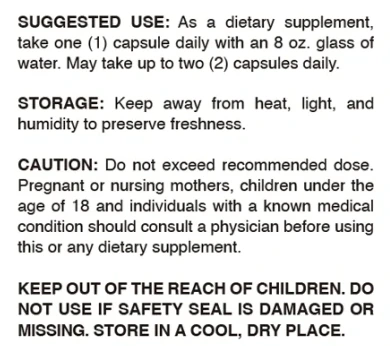
One capsule with an 8 oz glass of water, as the label says. No time is printed; tie it to breakfast so it is hard to skip. Prescribed medicine keeps its own schedule.
- Before breakfast: the cuff
Sit 5 minutes, arm at heart level, two readings one minute apart, and write them down (AHA).
- A walk after work
Adults need 150 minutes of moderate activity a week (CDC): about 30 minutes, five days.
- Night, 7 or more hours
CDC: adults 18-60 need 7 or more hours; enough sleep helps lower the risk of high blood pressure.
Cuff steps from the American Heart Association (AHA, Home blood pressure monitoring); activity (CDC, Adult activity guidelines) and sleep (CDC, About sleep) from the CDC. The capsule time is only a suggestion, so go by your label.
05Supplements
Can a supplement treat a heart attack?
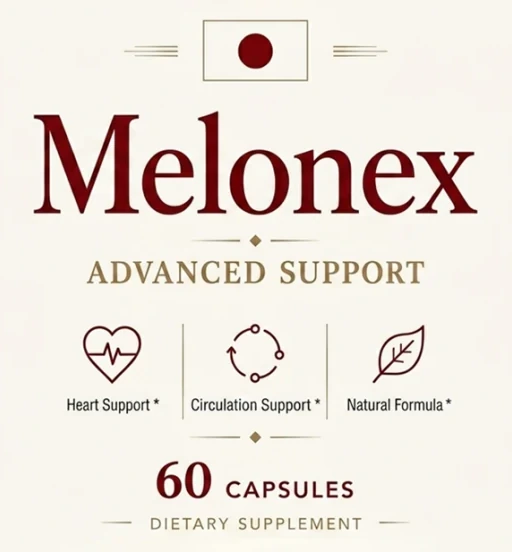
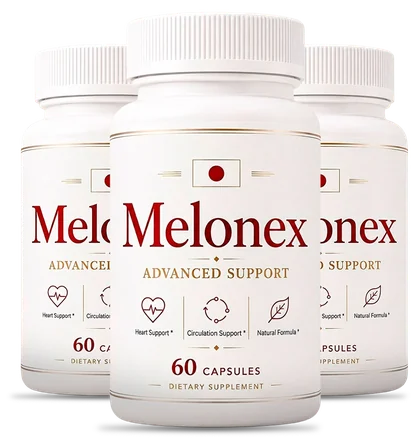
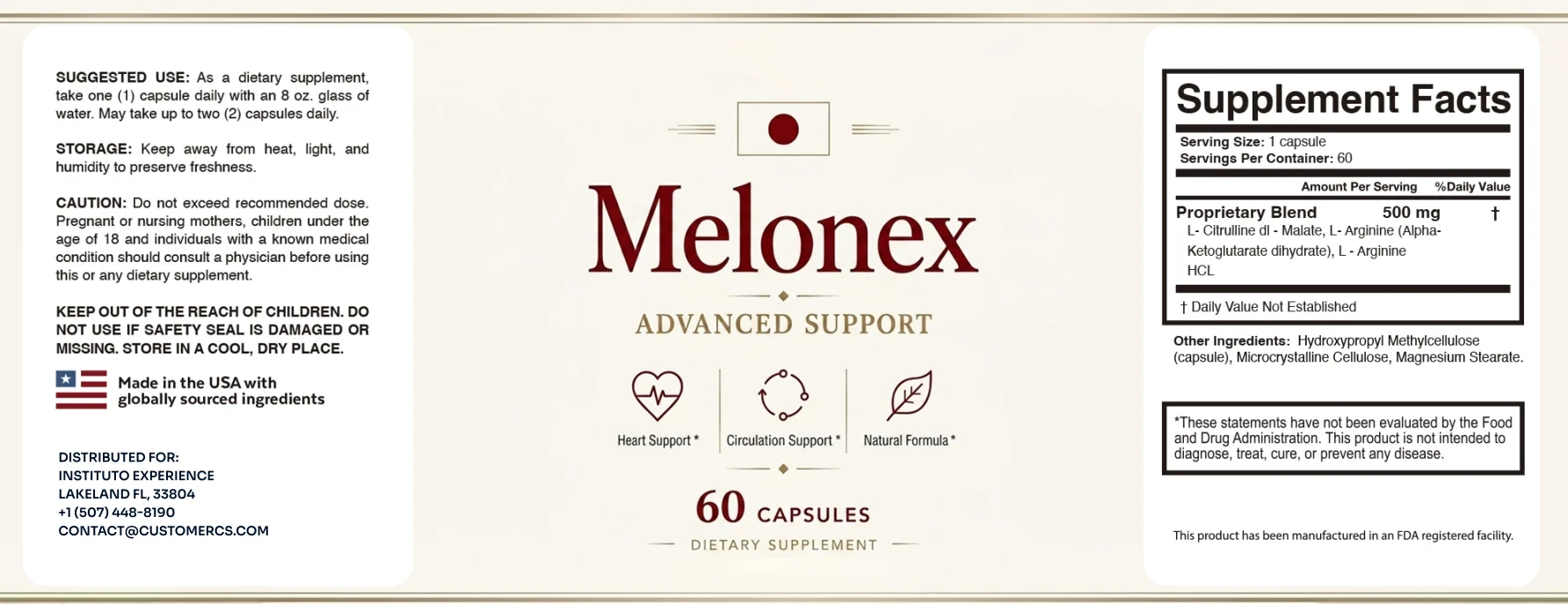
No. A dietary supplement cannot treat a heart attack, and Melonex is not a medicine.
The Melonex label says its statements are not evaluated by the FDA and it is not meant to treat or prevent disease. If you have had a heart attack, read arginine after a heart attack and ask your cardiologist before any arginine product. Keep taking prescribed medicine, and tell your doctor everything you take. For the cuff side, see our post on caffeine and blood pressure.
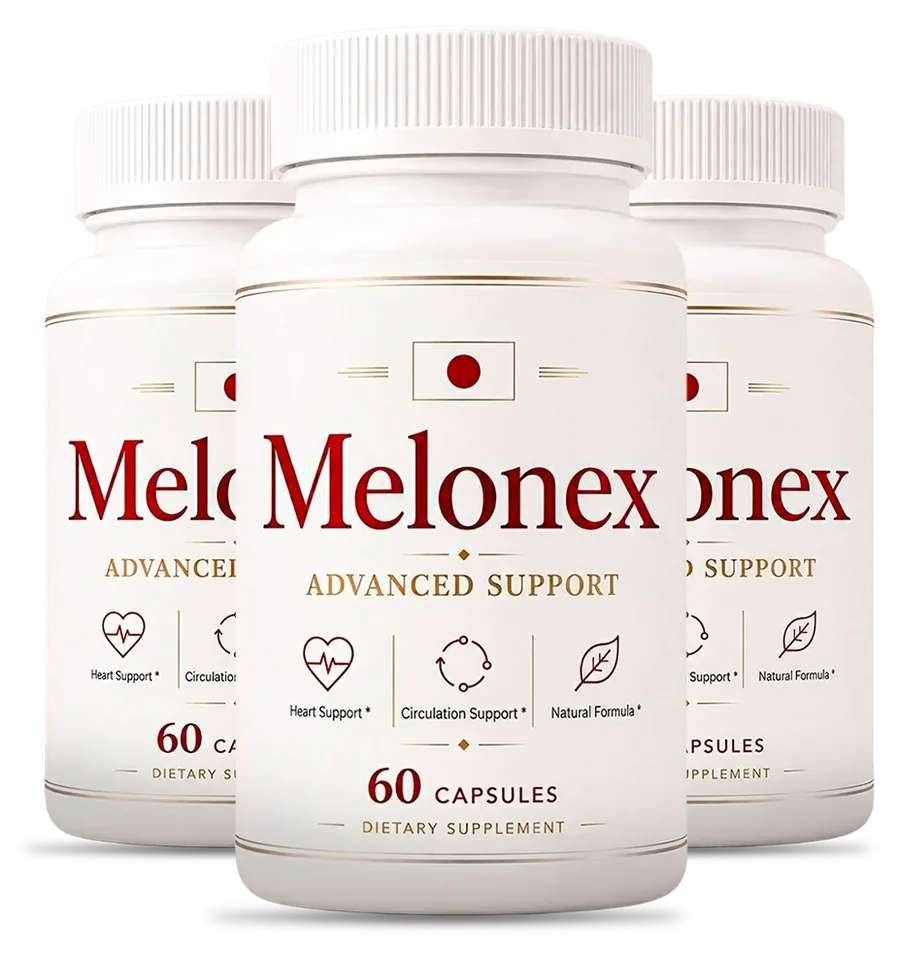
Prices listed on the seller's order page; confirm at checkout. The 2-bottle kit costs $158, with $9.99 shipping. Ask your doctor about your medicines first. 60-day money-back guarantee per the seller.
Melonex is not a treatment; it is a dietary supplement. Ask your doctor or pharmacist first if you take blood-pressure medicine, nitrates for chest pain, an erectile-dysfunction drug such as sildenafil or tadalafil, a potassium-sparing diuretic (amiloride, spironolactone, triamterene), a blood thinner, or diabetes medicine, or if you have had a recent heart attack. Arginine and citrulline can add to these. Keep taking prescribed medicine. See side effects and interactions.
06FAQ
Melonex questions people ask
What are the first signs of a heart attack?
Chest pain or discomfort, feeling weak or faint, pain in the jaw, neck, back, arms or shoulders, and shortness of breath. Unusual tiredness, nausea or vomiting can come too. Call 911 right away if you notice these.
How long does heart attack chest pain last?
The CDC says chest pain lasting more than a few minutes, or coming and going, is a warning sign. Do not time it at home. Call 911 as soon as you suspect a heart attack.
Should you drive yourself to the hospital with chest pain?
No. Call 911. Emergency crews can start care on the way, and the CDC says faster treatment reduces heart muscle damage. Stay with someone if you can.
Are heart attack signs the same in men and women?
They overlap, but the CDC says unusual or unexplained tiredness, nausea or vomiting are more common in women. Chest discomfort remains common in both. Treat any suspected sign as urgent and call 911.
07Who wrote this
Written and reviewed by
Pages built from the label, the seller's materials and linked NIH, FDA, CDC, AHA, FTC and peer-reviewed sources.
Last updated . Read how we write and how we check reviews. This website is run by Melonexheart, which describes itself as a U.S. authorized Melonex merchant. It is not the manufacturer or the label's distributor, and we cannot independently verify the 'authorized' status. We are paid when you buy through our order links.
+Keep reading
More about Melonex

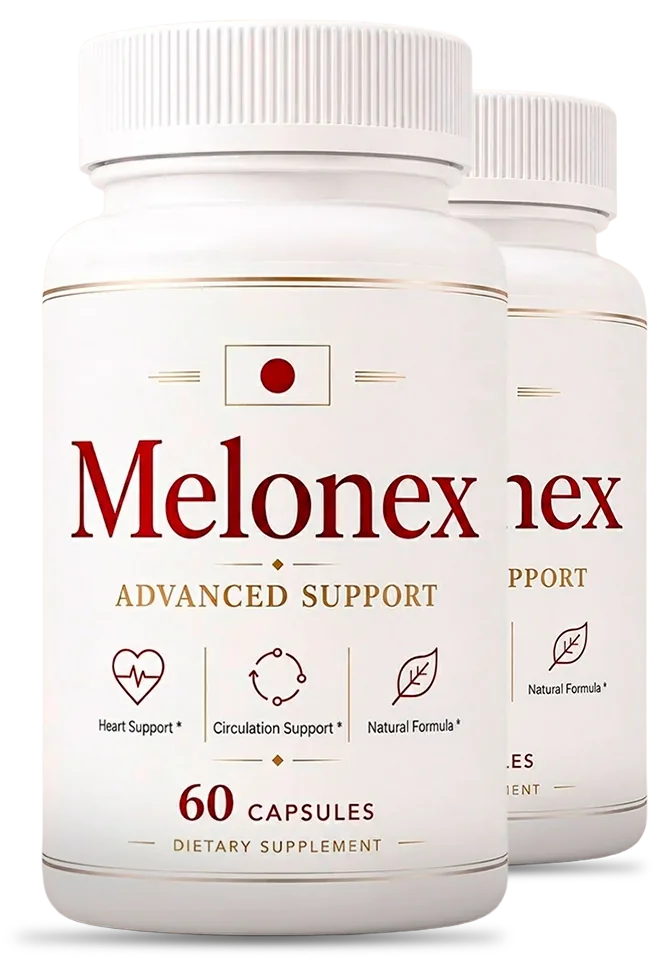
U.S. authorized Melonex merchant
Ready to try Melonex?
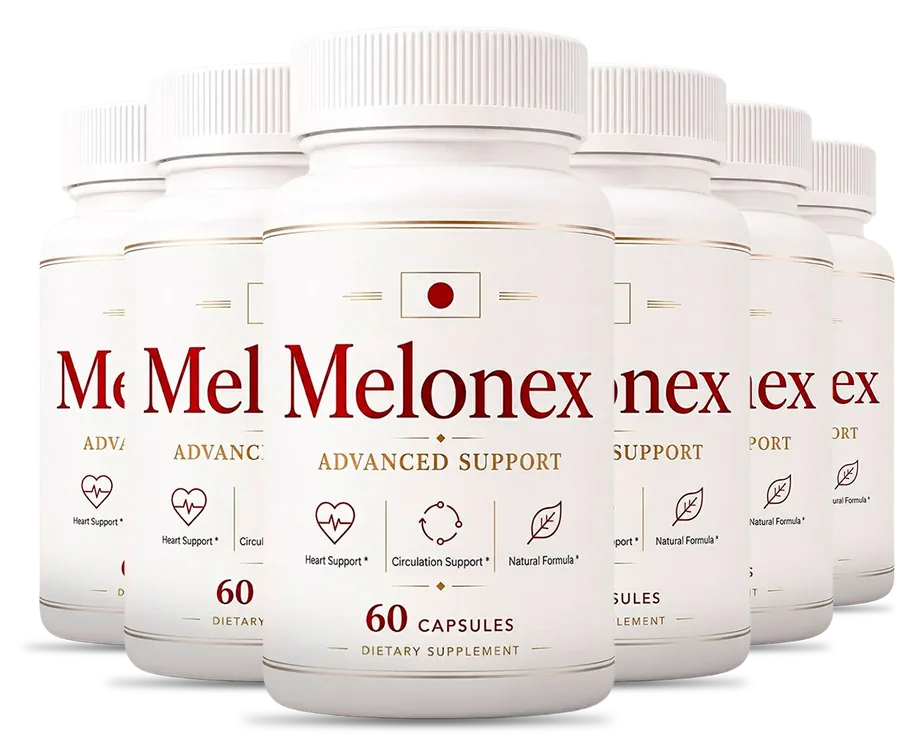
Show the bottle to your doctor or pharmacist first, then pick a pack. Six bottles cost the least per bottle, and the seller lists a 60-day money-back guarantee on every pack.
- Secure checkout
- 60-day money-back
- Ships from the U.S.